Blog · 3 Nov 2026
Planning a modular kitchen: what to decide before it’s built
The kitchen is the hardest-working room in an Indian home: daily tadka, heavy steel utensils, bulk grains and masalas, and water everywhere. A kitchen that looks good in a 3D view but ignores how you cook will annoy you every day. Here is what to decide, in order.
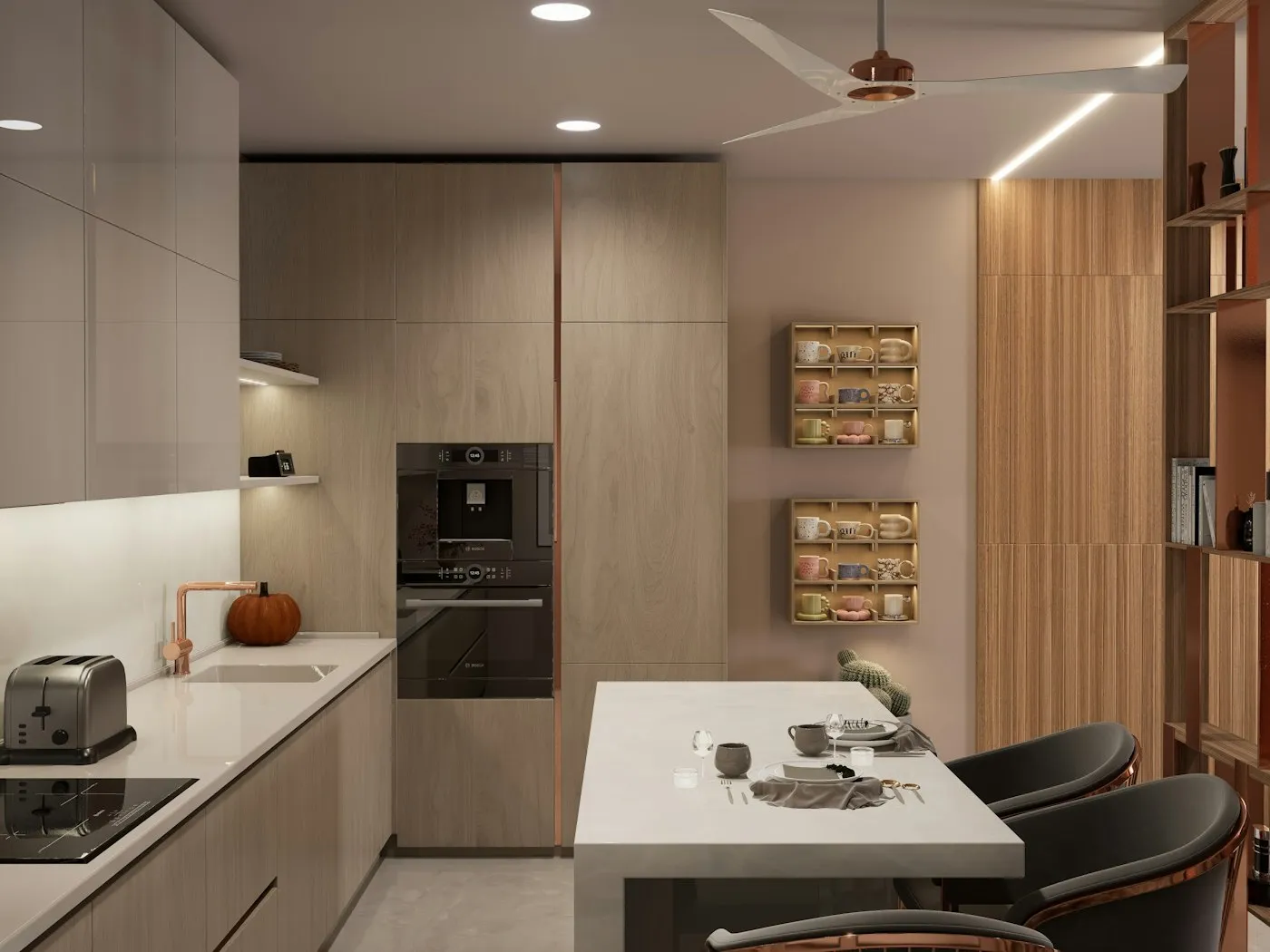
The short answer
Plan a modular kitchen in this order: how you cook, the layout, where the sink, hob and fridge go, the board and finish, the countertop, the chimney, storage, hardware, and finally every electrical point. Lock the layout and electrical points before carpentry starts. They are the most expensive things to change later.
1. Start with how you cook
Before looking at designs, answer a few questions. How many people cook, and at the same time? Do you make rotis daily? Do you store grains in bulk? Do you need space for a mixer, microwave, OTG, water purifier and dishwasher? Is there a separate wash or utility area? The answers decide everything below.
2. Pick a layout that fits the room
- Straight (one wall): for narrow kitchens. Simple, but counter space runs out quickly.
- L-shaped: the most common in Ahmedabad flats. Good counter space, and the corner can hold a sink or hob.
- Parallel (galley): two counters facing each other. Very efficient if the passage is wide enough for two people.
- U-shaped: the most storage and counter space, for larger kitchens.
- Island or breakfast counter: only with enough room to walk around it comfortably.
3. Place the sink, hob and fridge
Designers call this the work triangle: you move between these three constantly, so keep them close but not cramped. Leave clear counter space on both sides of the hob for cutting and serving. Keep the hob away from the window, where wind blows out the flame, and away from the fridge, where heat makes it work harder.
4. Choose the board for each zone
The sink unit faces water every day, so it needs moisture-resistant board: BWP or BWR grade plywood is the usual choice. Some households use a different material under the sink altogether. Ask your designer what they specify for the sink, the hob and the tall units, and get the grade written in the quote.
5. Countertop
Granite is the traditional choice: tough, heat-tolerant and forgiving of heavy vessels. Quartz gives a more uniform look and resists stains, but don't put very hot vessels straight on it. Whatever you choose, ask about the edge finish and how the sink joint is sealed.
6. Chimney and ventilation
Indian cooking produces a lot of oil and smoke, so a chimney is close to essential. Decide early whether it will duct to the outside, and where the duct runs. That affects the false ceiling and the wall above the hob. Size the chimney to the hob, and plan a power point for it at the right height.
7. Storage that matches what you keep
Deep drawers for heavy utensils, a pull-out for masala jars near the hob, a tall unit for bulk grains and groceries, a cutlery organiser, a bottle pull-out, and a dedicated corner solution so the corner cabinet isn't wasted. Drawers are usually easier to use than shelves behind a shutter, because you can see everything at once.
8. Hardware
Hinges, drawer channels and baskets carry the most weight and get used the most. Soft-close hardware from an established brand costs more, but it is the difference between a kitchen that still closes smoothly after five years and one that doesn't. Get the brand named in the quote.
9. Electrical points, the decision most people rush
List every appliance before the electrician starts: mixer, microwave, OTG, purifier, chimney, fridge, dishwasher, induction and any under-cabinet lights. Each needs a point at the right height, and heavy appliances need suitably rated sockets. Adding a point after the backsplash and cabinets are in place is messy and expensive. In the stages of a full home interior, this is stage 5, well before carpentry.
10. Finish and colour last
Laminate is the most practical finish for a busy kitchen. Acrylic and PU look glossier but show scratches and fingerprints more. Lighter shutters make small kitchens feel bigger. Choose from physical samples, under your own kitchen light. Our guide on what decides the cost of a home interior explains how each of these choices moves the price.
We'll measure your kitchen, ask how you cook, and show you the layout in 3D before anything is built. The site visit is free.
Get a free consultation